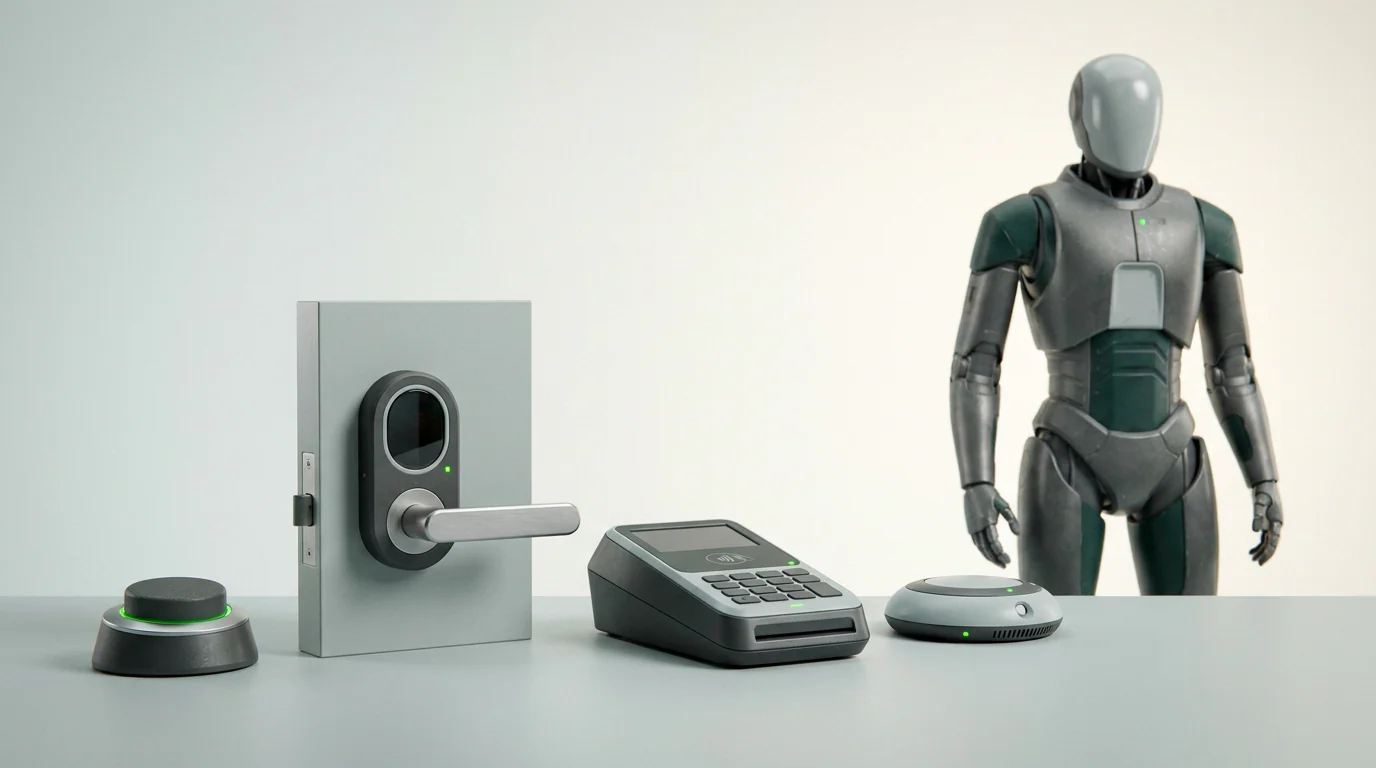
Auditable autonomy
An enterprise does not buy autonomy; it buys the ability to answer for what an autonomous system did. Every decision logged, supervised operation, guaranteed safe-stop and data that stays in your region are not features of our systems. They are the product.
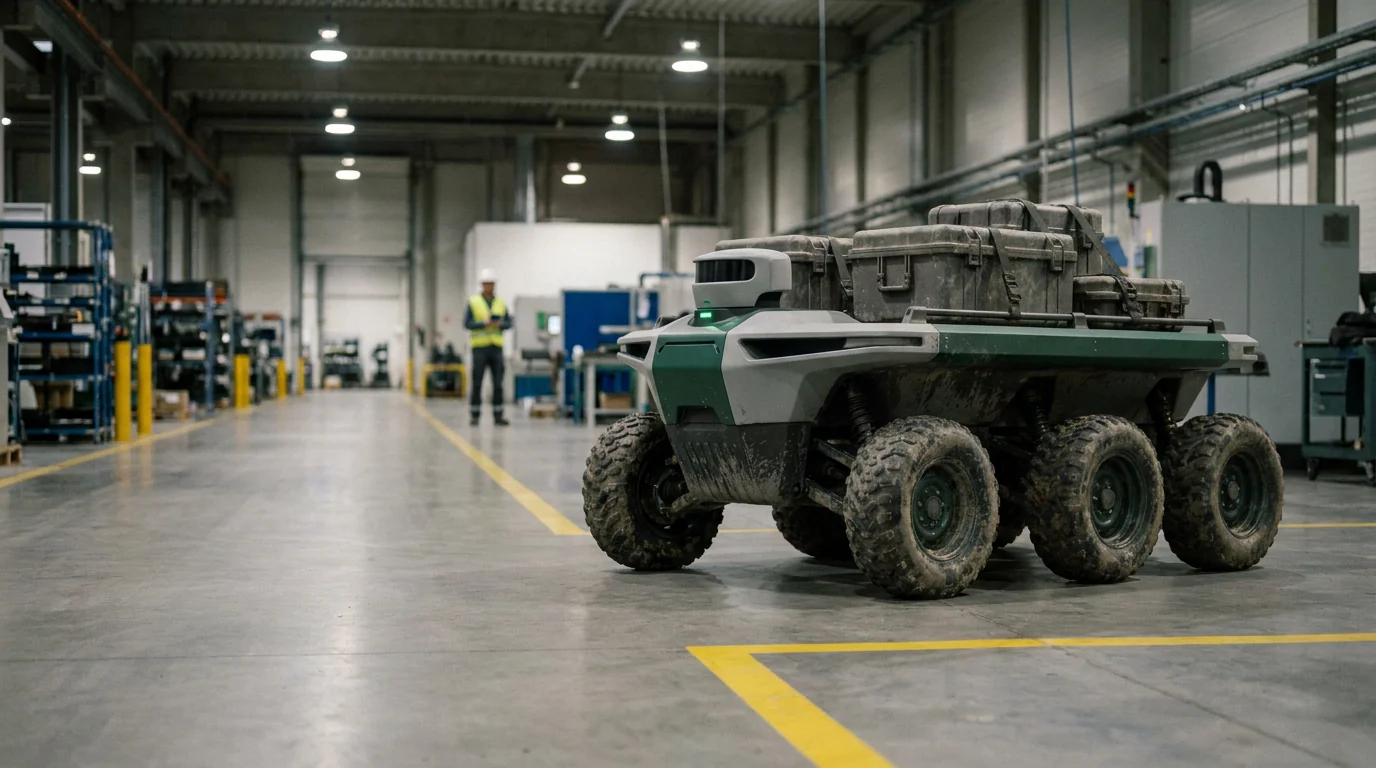
Part of the robotics conversation is about capability: how much a system can lift, how far it can fly, how long it can run. We have specifications for that. But it is not the conversation that decides whether an enterprise deploys.
The conversation that decides is about accountability. When a system acts inside a plant, a port or a hotel, who authorized it, what did it decide, why, and what happened as a result. If those questions cannot be answered after the fact, precisely and quickly, the system does not go into production no matter how capable it is.
That is why we say the product is not autonomy. It is auditable autonomy.
Every decision is a record
Every Hivora system, from a lock to a humanoid, produces a record for every decision it takes part in. Not a log line; a record with a shape. It states which identity requested the action, which device executed it, what authorization it received, what inputs it was based on, what the outcome was and when each step happened. For autonomous systems, Hivora Hive adds the mission context: what the system was asked to do, what plan it chose and which safety checks were evaluated along the way.
Those records go to Vectry, the same record that holds every door opening, every payment and every sensor reading in your operation. An incident review, a compliance audit or a simple question from a manager all resolve against one source.
This is a design constraint: a system that cannot produce the record does not take the action.
Supervised, not unattended
Autonomy in our systems is bounded by design. Hivora Hive plans missions and arbitrates safety in real time, but the boundaries within which it does so are set by people: where a system may operate, what it may do there, what conditions require it to stop and who is allowed to intervene.
An operator can watch any system, interrupt any mission and take any unit out of service at any time. When a system encounters a situation its mission did not anticipate, it does not improvise. It stops, reports and waits for a person. Anyone who has run an industrial site will recognize that as a feature.
The system also knows who it is working for. Each unit has a known identity, each mission is authorized through Veripass, and nothing acts on a site anonymously. A command that does not come from a recognized identity is not a command.
Guaranteed safe-stop
Every Hivora system has a safe state and is guaranteed to reach it: on command from an operator, on loss of communication with Core, on any safety condition it cannot resolve on its own, or from a physical stop button where the platform has one.
For a fixed device the safe state is simple: a lock holds, an elevator ignores unauthorized floor requests, a gateway keeps the last known rules. For a moving system it is harder, and it is where most of the robotics program’s engineering effort goes: a humanoid must stop without dropping what it carries onto a person, an aerial platform must land or hold in a way that does not endanger anyone below, a ground vehicle must brake and hold on a slope. Safe-stop is exercised routinely, so that it works when the situation is not routine.
Data stays where your policy says
These records describe your operation in detail. Where they live is your decision, not ours.
Hivora systems run with the control plane in the cloud or on your premises, and telemetry and event data reside in the region your policy requires. For sites that cannot depend on connectivity, Hivora Edge keeps identities, rules and records local and reconciles when the connection returns. Nothing in the way the systems work assumes your data leaves your jurisdiction.
The standards we design against
We design and test against the standards our sectors are held to, and treat them as engineering inputs rather than a checklist.
- ISO 10218 and ISO 13482 for robot safety, covering industrial systems and systems that operate alongside people.
- SORA and EASA frameworks for aerial operations beyond the visual line of sight.
- SOC 2 Type II for the handling of data and telemetry.
- GDPR and ISO 27001 for privacy and information security.
Certification is a per-deployment conversation, because it depends on the site, the sector and the jurisdiction. What holds in every case is that the systems were built with these frameworks in front of the engineers, and that the record they produce is the evidence an assessor will ask for.
Why auditability is the product
An operations manager needs to know what a system did on the night shift. An insurer needs to know how it is stopped. A regulator needs to know who authorized it. A safety officer needs to reconstruct an incident to the second. A customer needs to know that their data did not leave the country.
Every one of those is a question about the record, which is what our systems are built to produce. Capability determines what a system can do. Auditability determines whether anyone will let it.
If your operation needs to answer those questions, request access. We work with a selected group of partners and every engagement starts as a scoped pilot.