A lock that asks first
A key is a permission that never expires and never reports back. HiveLock replaces it with a question: before the bolt moves, the lock asks Veripass whether this identity may open this door right now.
A metal key is a remarkable piece of engineering, and it has one unfixable flaw: it does not know who is holding it. Neither does a code typed on a keypad, nor a card copied in a lobby. Every one of them is a permission that was granted once, never expires on its own, can be handed to anyone, and leaves no trace of having been used.
Buildings have lived with that flaw for a century because there was no alternative. The alternative is a lock that does not own the decision.
Identity instead of keys
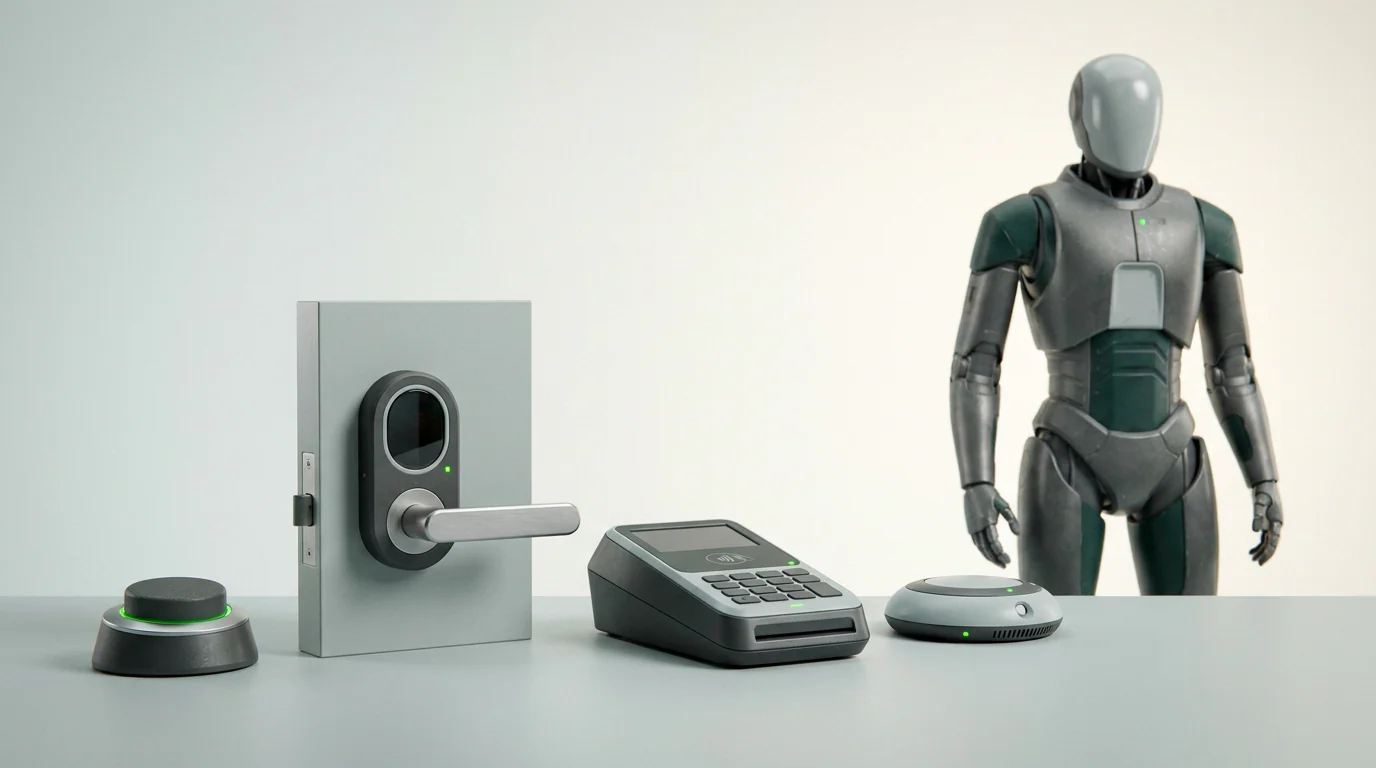
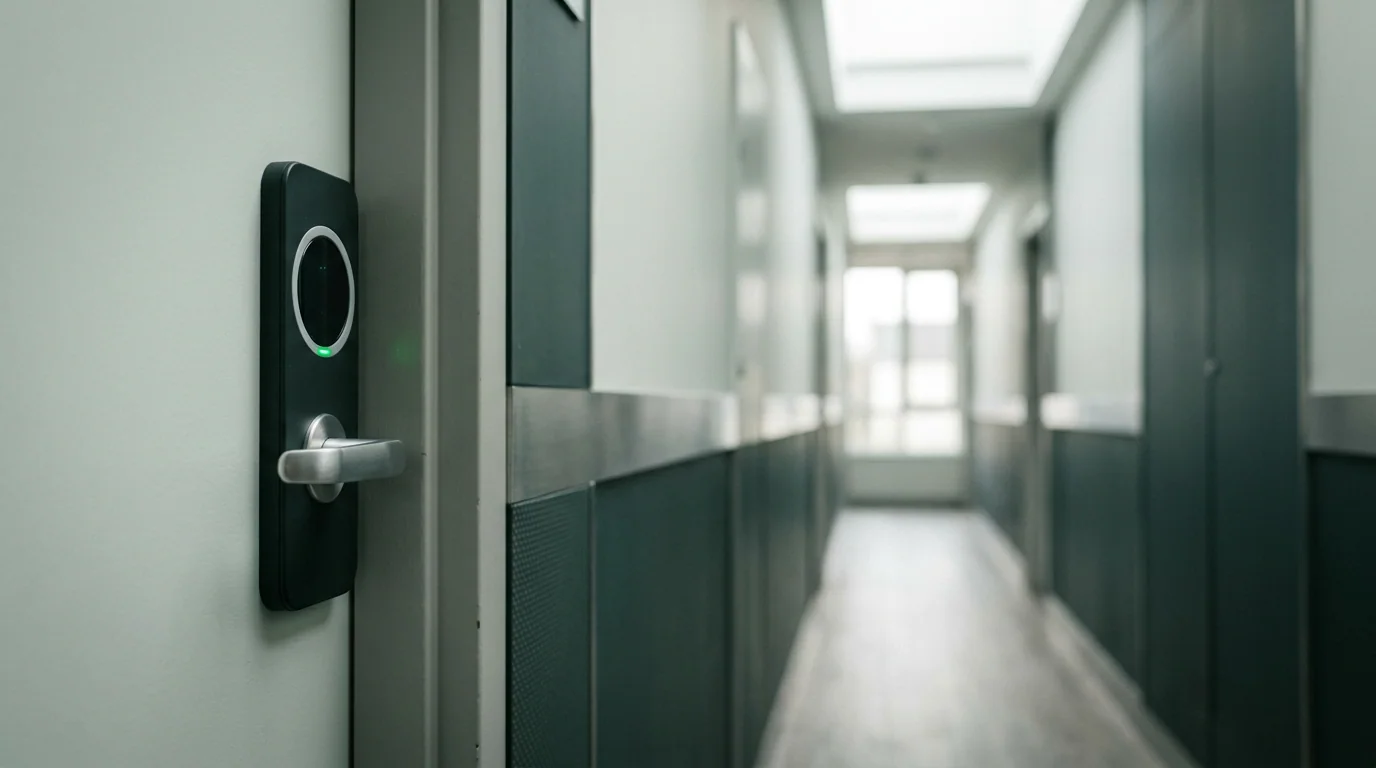
HiveLock is the flagship device of the Hivora Access family, and its behavior fits in one sentence: it reads the credential presented at the door, asks Veripass whether that identity may open this door right now, and moves the bolt only on a yes.
That sentence hides a change of ownership. In a conventional building, the lock decides. Whoever configured it, whoever holds the key, whoever knows the code: the decision lives in the hardware and in whatever is physically in someone’s pocket. With HiveLock, the decision lives in software. The lock is the executor of a policy it does not define.
The credential can be a phone, a card or whatever your operation issues, because the credential is not the point. The point is that behind it there is an identity Veripass recognizes, with permissions that have a scope and an expiry, and a record of every time they were exercised.
What changes for a hotel
Hospitality is where the difference is most visible, because a hotel issues and revokes thousands of permissions a week and does it with plastic.
With HiveLock, check-in stops being the moment a card is encoded and becomes the moment a reservation turns into a permission. The guest’s identity is linked to the booking, the booking to the room, and the room to a window of validity. The door opens for that identity from check-in to checkout and not one minute longer. Late checkout is a change in software, not a trip to the front desk. A lost phone is a revocation, not a rekeying.
Housekeeping gets the same treatment. A room attendant can open the rooms on their assignment during their shift, and nothing else. A maintenance contractor gets a door, a time window and a reason. When the window closes, so does the door. Nobody has to remember to collect anything.
The front desk, meanwhile, stops being the place where access is manufactured and becomes the place where exceptions are handled.
What changes for any building
Offices, campuses, clinics and industrial sites face the same problem with a different vocabulary: badges instead of key cards, contractors instead of guests, restricted areas instead of rooms. The mechanics are identical.
- Permissions have a shape. Who, which door, when, until when, and why. All of it is decided once in Veripass and executed everywhere.
- Revocation is instant and total. An identity that leaves the organization stops opening doors across every site at the same moment.
- Every open is an event. Each request, each answer and each bolt movement is reported to Vectry, so an audit is a query rather than an investigation.
- The site keeps working without the cloud. Through Hivora Edge, a building holds the identities and rules it needs locally, keeps opening doors for the right people during an outage, and reconciles the record when the connection returns.
The lock updates itself
Locks used to be the most static object in a building. Once installed, they did what they did until someone replaced them. HiveLock receives new capabilities and fixes remotely, without a site visit and without taking the door out of service. That matters more than it sounds: access policy evolves, threats evolve, and the equipment on the door should be able to evolve with them at the pace of software rather than the pace of a maintenance contract.
Each unit is also a known identity of its own. A HiveLock is not an anonymous piece of hardware answering to whoever addresses it; it is a named device that Veripass recognizes, and a request that does not come from a known device is not a request.
The same decision, on every door
HiveLock is the device most people meet first, but the decision it embodies runs across the whole Access family. Readers at lobbies, turnstiles at gates and Lift Controller in elevators all ask the same question of the same authority and report to the same record. Who may enter, where and until when is decided once, in software, and executed by every device on the site.
That is what we mean when we say Veripass decides and Hivora makes it happen. If your property or your site runs on keys, cards and codes today, and you would like to see what it looks like when it runs on identity instead, request access. Every engagement starts as a scoped pilot at your facility.