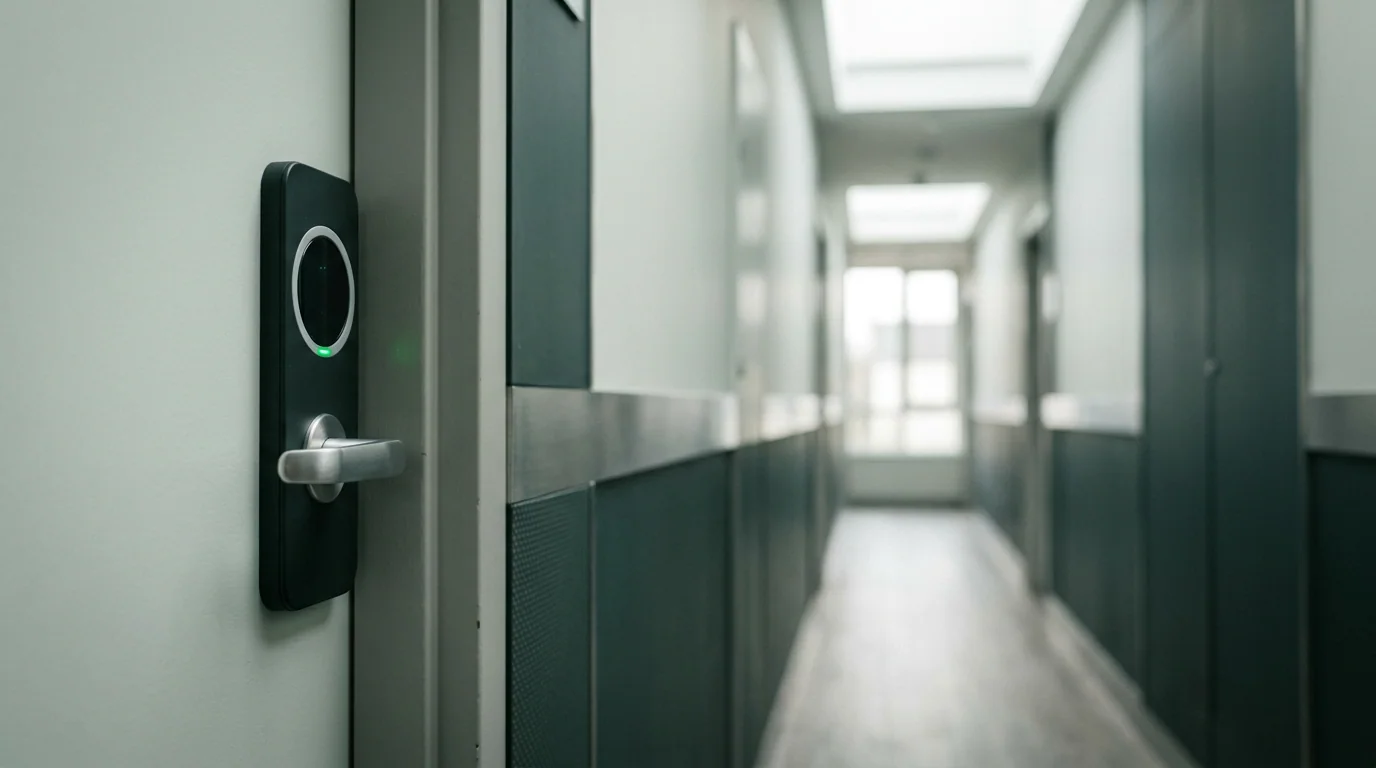
Why a hardware company builds robots
Locks and elevators taught us how to put software in charge of the physical world. Humanoids, aerial and ground autonomy are the same discipline with more degrees of freedom, and the pivot of the next decade.
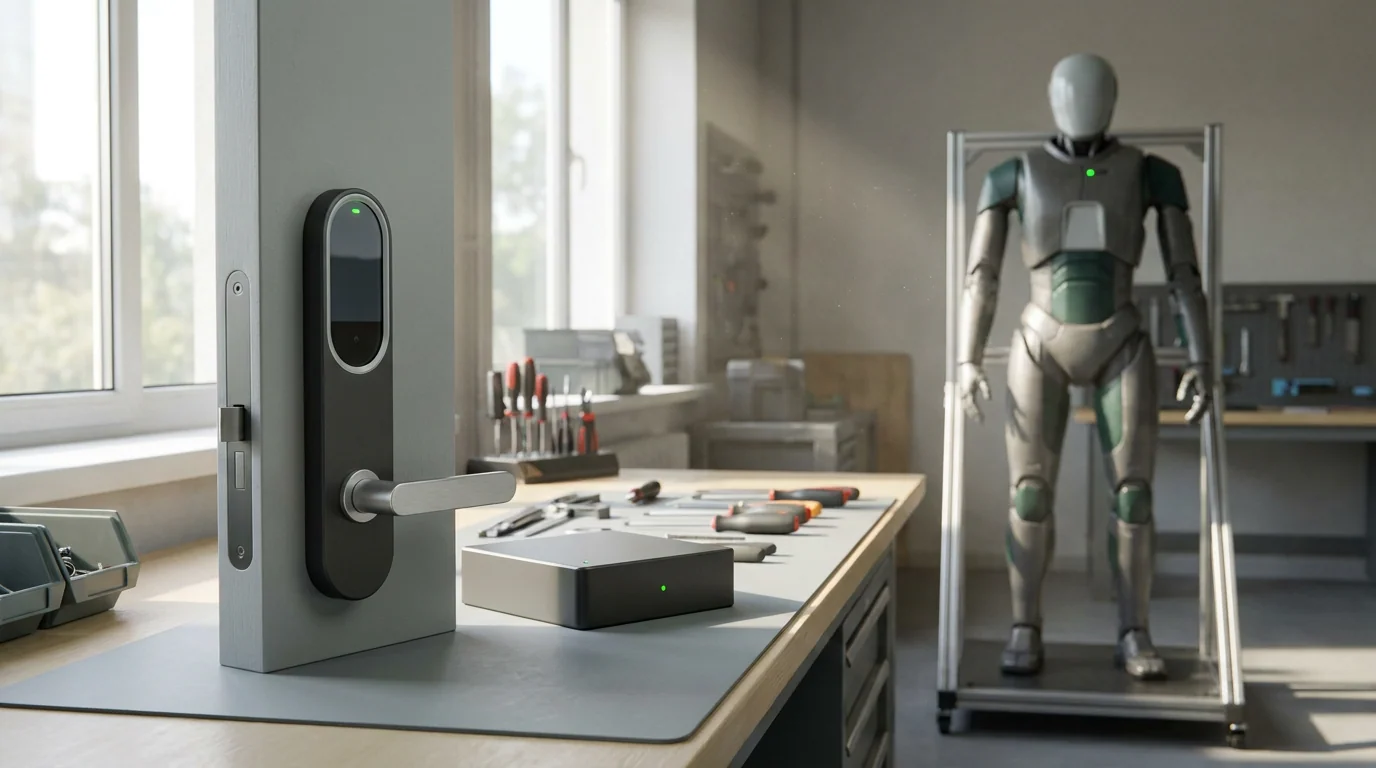
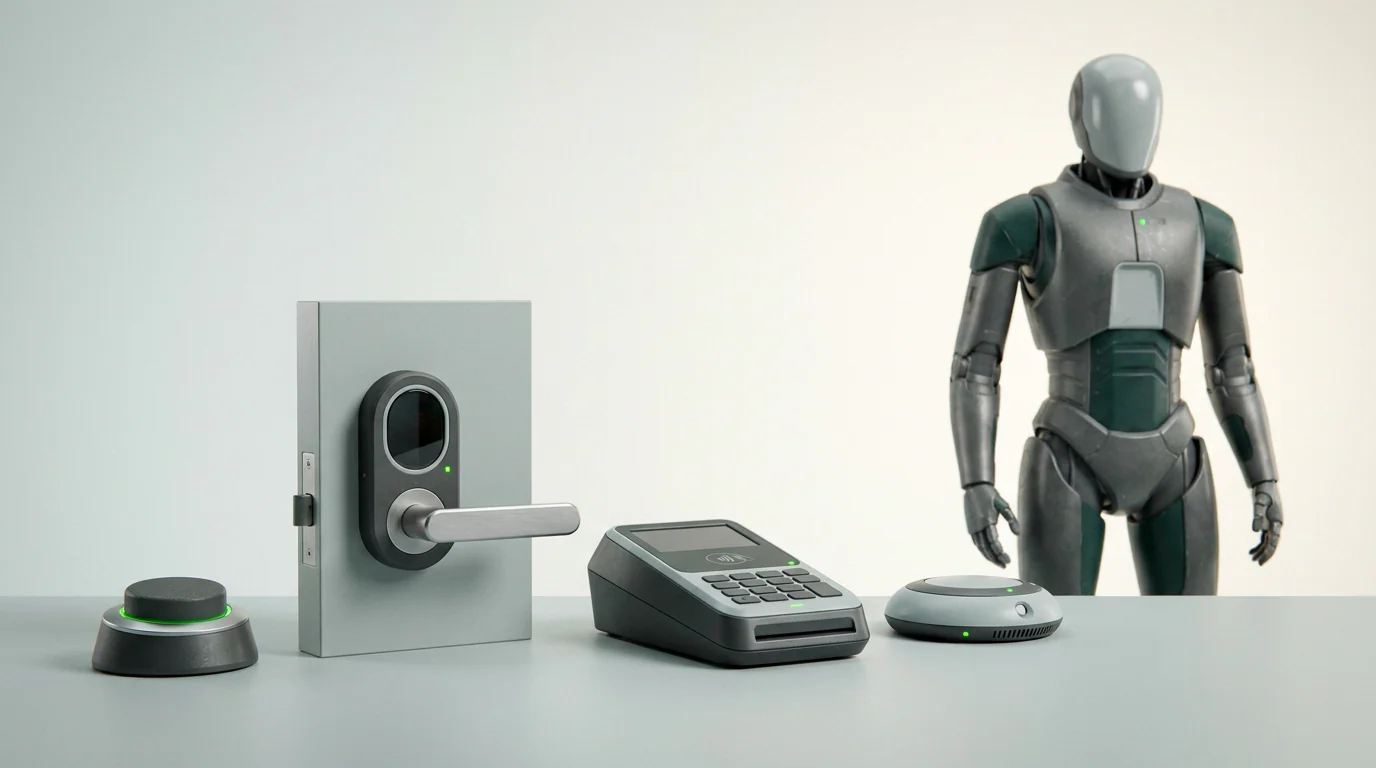
Hivora Dynamics started with the building. Doors, elevators, terminals, sensors: the fixed equipment that decides, every day, whether an operation runs smoothly or grinds. That line is still what carries the company, and it will for some time. So the question we get asked most often is a fair one. Why is a company that makes locks and controllers also building a humanoid, an aerial platform and a ground vehicle?
The short answer is that the building was only the first customer. The work that moves through it is the next one.
The pivot of the decade
For the past decade, enterprise operations have been digitized around fixed points: a reader at the gate, a terminal at the counter, a sensor on the ceiling. That model has a ceiling of its own. Once every fixed point is connected, the remaining cost of an operation is in what moves: picking, transporting, inspecting, patrolling, maintaining. Those tasks are done by people walking, driving and climbing, often in environments that are hostile, repetitive or simply far away.
We think the next ten years of industrial operations will be defined by how much of that movement can be delegated to systems that are supervised, accountable and integrated with the rest of the operation. Not replaced in bulk, and not handed to a black box. Delegated, with a record.
That is a hardware problem, a safety problem and an integration problem before it is a robotics problem. It happens to be exactly the set of problems we had already been solving at the scale of a door.
Three platforms, one discipline
The robotics program has three systems, each aimed at a different kind of movement.
HV-1 Operator is a humanoid for spaces that were designed around people: production lines, warehouse aisles, maintenance corridors, stairs. It manipulates with two arms, carries a payload sized for real tasks and works a full shift on a charge. Its value is that the space does not have to change for it to be useful.
AX-Cirrus is an aerial platform for inspection. Towers, power lines, solar plants and perimeters are exactly the places where sending a person is slow, expensive and occasionally dangerous. AX-Cirrus is designed for operation beyond the visual line of sight, so an inspection is a scheduled mission, not an outing.
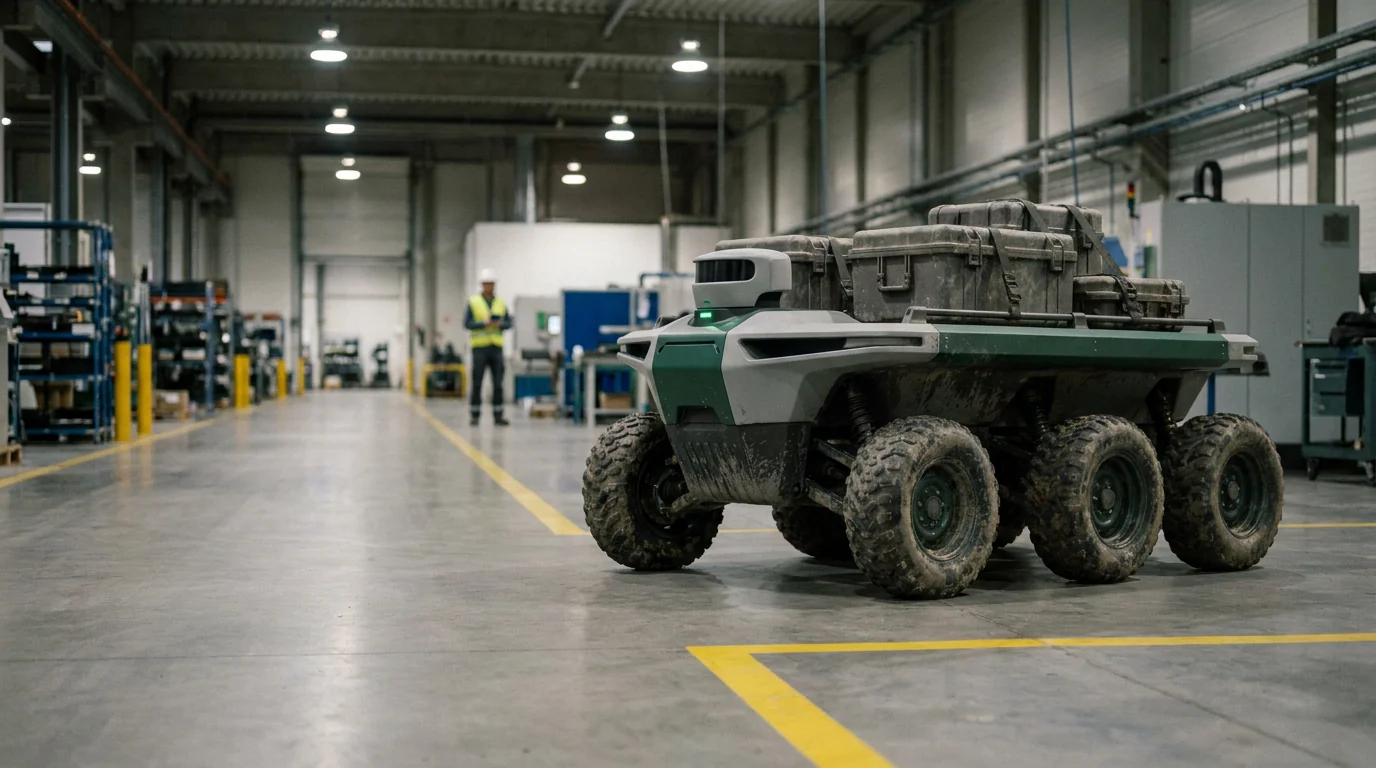
GX-Terra is a ground vehicle for patrol and heavy transport across open industrial sites: mines, ports, large campuses. All weather, around the clock, with a payload that makes it a working vehicle rather than a camera on wheels.
Above the three sits Hivora Hive, which plans missions, arbitrates safety in real time, manages the identity of every system and reports every decision to Vectry. Core is what makes three platforms one program instead of three products.
All three are operating today at our facility.
Deliberately not yet the core of the business
Connected hardware is the core of Hivora today. It is deployed, it carries availability commitments, and it funds everything else. The robotics program is in operation at our facility and in scoped pilots with selected partners. It is not a general product, and we are not pretending otherwise.
We put robotics at the front of the site anyway because it is where the discipline is headed, and we would rather partners understand that direction early. A company that sells you a lock today and a humanoid in three years should be judged on whether the two share the same engineering standards. Ours do.
Operating capacity, not robots
We do not sell robots; we deliver operating capacity. In practice, that means:
- A deployment is scoped around an outcome: hours of picking per shift, inspections completed per week, kilometers patrolled per night, with an availability commitment attached.
- Integration engineering is part of the engagement. The systems report into your operation, not into a separate dashboard nobody looks at.
- Supervision is designed in. Hivora Hive keeps a human in the loop, every system can be brought to a safe stop, and every decision is recorded.
- The equipment stays ours to maintain, update and replace. You are buying the capacity, and we are accountable for the machine that provides it.
This is the same model our hardware line already runs. A partner does not buy a hundred locks; they buy the ability for rooms to respond to reservations, and we make sure that keeps being true.
Why a hardware company is the right one
Every Hivora device, from a lock to a gateway, already carries the properties a robot needs before it can be trusted on a site. Each unit has a known identity and cannot act anonymously. Each receives new capabilities remotely, without a site visit. Each falls back to a safe state when the connection drops. Each reports every action as an event that someone can audit later.
A humanoid, an aerial platform or a ground vehicle needs all of that, plus the ability to move. We did not have to invent the discipline for robotics; we had to extend it to systems with many more degrees of freedom.
If your operation involves the kind of movement we described, request access. We work with a selected group of partners, and every engagement starts as a scoped pilot.